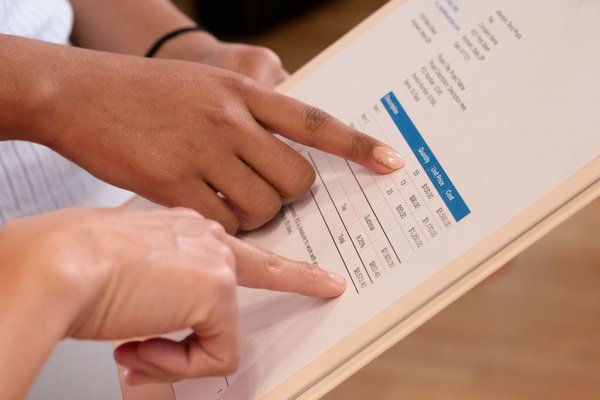
New-car pricing looks simple until you see several numbers for the same vehicle. The window sticker shows MSRP, online research may show a dealer invoice price, and the salesperson may talk about discounts “below invoice.” In 2026, those figures still matter, but none tells you by itself what the dealership truly has invested in the car or what you should pay. The useful question is what each number represents and how it helps you judge a fair deal.
MSRP is a reference point, not dealer cost
MSRP stands for manufacturer’s suggested retail price. For a new vehicle in the United States, the manufacturer’s suggested price appears on the federally required window label, commonly called the Monroney sticker, along with factory-installed options and the destination charge. MSRP is the manufacturer’s retail benchmark; it is not proof of what the dealer paid.
Market conditions can push transaction prices below or, in some cases, above sticker. A widely available model may sell at a substantial discount, while a scarce or newly redesigned trim may have little room. So when you see MSRP explained as a fixed ceiling or guaranteed target, treat that as an oversimplification.
What the dealer invoice price really means
The dealer invoice price is the amount shown on the manufacturer’s billing paperwork to the dealership. It generally reflects the vehicle, factory options, destination charges, and other manufacturer-assessed items. Because invoice is normally lower than MSRP, shoppers often assume it represents the dealer’s absolute break-even point.
That is where the usual invoice price vs MSRP explanation becomes incomplete. Invoice is a real accounting figure, but the dealership’s eventual net cost can change after manufacturer programs, inventory expenses, and other credits are considered. For buyers, invoice is best treated as a negotiation reference, not a guaranteed wholesale floor.
Why invoice is not the same as true dealer cost
Dealer holdback can create margin below invoice
Dealer holdback is a manufacturer-to-dealer payment or credit that returns part of a vehicle’s value to the dealership after the initial invoice. Programs vary by manufacturer, and not every brand uses the same formula. A commonly cited industry range for traditional holdback is roughly 2% to 3% of MSRP or invoice, but buyers should not assume one percentage applies to every vehicle.
Holdback helps explain why a dealer can sometimes sell at or below published invoice and still retain margin. It does not mean the entire holdback is automatically available as a discount. Dealers use these funds to support inventory carrying costs and overall operations, and they can simply reject an offer that goes too low.
Factory incentives change the math again
Manufacturers may also offer dealer cash, volume bonuses, aged-inventory support, regional programs, or other incentives. These can reduce effective cost on specific vehicles, but they change over time and may depend on conditions buyers cannot see. They are also different from customer rebates advertised directly to qualifying shoppers.
A practical example
Imagine a new SUV with an MSRP of $42,000 and a published invoice price of $39,800. Suppose, purely for illustration, the manufacturer effectively returns $840 through holdback and offers a temporary $1,000 factory-to-dealer incentive. Those credits could reduce the effective vehicle cost to roughly $37,960 before other costs, bonuses, or adjustments.
That does not mean you should demand $37,960. It means a salesperson saying “we are already at invoice” does not necessarily end the negotiation. A stronger approach is to compare written offers from several dealers on the same trim and equipment. Useful internal-link topics here include new car negotiation checklist and how to compare out-the-door car prices.
The number that matters most is the out-the-door price
MSRP and invoice help you understand the deal, but your real cost is the out-the-door figure. That includes the agreed vehicle price plus mandatory dealer charges, taxes, registration, and other required amounts, while excluding optional products you choose to decline.
The Federal Trade Commission has continued to focus on misleading dealer pricing. In March 2026, it warned 97 auto dealership groups that advertised prices should reflect mandatory fees consumers are required to pay. The FTC also advises shoppers to request an out-the-door price in writing before visiting a dealership. That makes dealer quotes easier to compare and helps expose conditional discounts or surprise fees.
When requesting a quote, specify the exact vehicle or stock number, confirm which rebates are included, and ask whether any discount requires dealer financing, a trade-in, military status, recent-graduate status, or another condition. Another useful internal-link topic is car dealer fees explained.
How to use MSRP and invoice when negotiating
Start with MSRP to understand the sticker benchmark. Check reputable market data for invoice and typical selling prices, then request written out-the-door quotes from multiple dealers for comparable vehicles. If one quote is dramatically lower, verify that it does not rely on rebates you cannot receive.
Keep the vehicle price separate from financing and your trade-in until you understand each component. A dealership can appear generous in one area while recovering profit elsewhere. Preapproved financing also gives you a useful comparison when the finance office presents its offer.
Do not spend too much energy trying to prove the dealer’s exact cost. You usually cannot. Your leverage comes from understanding the pricing layers and creating competition among dealers for your business.
Frequently asked questions
Is invoice price always lower than MSRP?
Usually, yes, although the size of the gap varies by vehicle and manufacturer. Invoice should not be treated as the dealership’s final net cost because holdback and other incentives may change the economics of the deal.
Can I ask a dealer to show me the invoice?
Yes. A dealer may choose to show manufacturer invoice paperwork, but it will not necessarily reveal every credit, bonus, or incentive the dealership receives. Use it as one data point rather than definitive proof of cost.
Should I negotiate from invoice price or MSRP?
Use both as reference points, but rely heavily on current market competition. Multiple written quotes for the same vehicle are often more useful than trying to calculate a theoretical minimum from invoice and holdback.
Can a dealer make money selling below invoice?
Yes, in some cases. Holdback, factory-to-dealer incentives, volume bonuses, financing income, and other revenue can allow a dealership to remain profitable even when the selling price is below published invoice.
What a fair price really looks like
MSRP is the manufacturer’s retail benchmark. Invoice is a manufacturer-to-dealer billing figure. Dealer holdback and incentives can move effective cost below invoice, while demand, inventory, fees, and financing shape the amount you ultimately pay.
For a 2026 buyer, the smartest goal is not to uncover one mythical “true cost.” Learn the layers, compare identical vehicles, insist on written out-the-door pricing, and negotiate the total deal. That gives you a clearer picture of what is fair than either MSRP or invoice can provide alone.