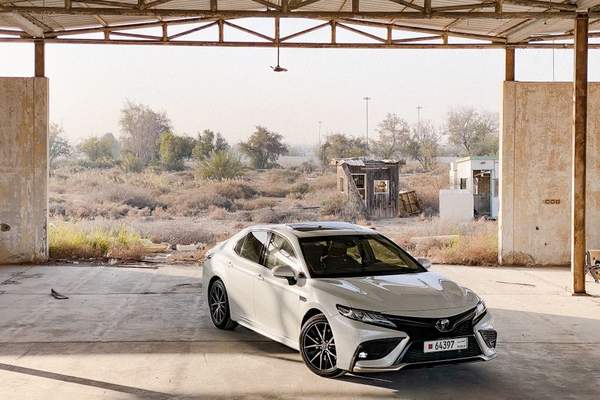
A comfortable sedan can still make plenty of sense when most journeys involve commuting, carrying passengers and covering highway miles. The Toyota Camry approaches those jobs with a hybrid powertrain, a roomy cabin and sensible technology. This Toyota Camry review examines comfort, fuel economy, driving feel and everyday value for U.S. buyers, including where paying for a higher trim makes sense.
What the Current Camry Offers
For 2027, Toyota continues the Camry’s hybrid-only approach. There is no gasoline-only model in the current U.S. lineup. Each trim combines a 2.5-liter four-cylinder engine with electric assistance and an electronically controlled continuously variable transmission. Front-wheel-drive versions produce 225 combined horsepower, while optional electronic all-wheel drive raises output to 232 horsepower.
The five trims are LE, SE, Nightshade, XLE and XSE. Toyota announced a $29,700 starting manufacturer’s suggested retail price for the 2027 LE, before processing, handling, taxes and dealer charges. The model is expected to reach U.S. dealerships in fall 2026; availability and actual selling prices will vary.
Driving Feel: Easygoing With Enough Response
Electric assistance helps the Camry pull away smoothly from traffic lights, while the gasoline engine contributes more as speed rises. The hybrid transmission favors consistent acceleration rather than noticeable gear changes. Under hard acceleration, engine speed may stay elevated, a characteristic some traditional-automatic drivers need time to appreciate.
The suspension is geared toward everyday comfort. LE and XLE models are natural candidates for buyers seeking a relaxed ride. SE, Nightshade and XSE versions have sport-tuned suspension components, giving them a firmer character. Larger wheels can also change how bumps feel, so drive the exact trim over familiar rough roads before deciding.
Does All-Wheel Drive Make Sense?
The optional system uses an electric motor at the rear axle to provide traction when needed. It can help on slippery surfaces, but it does not replace appropriate winter tires. Buyers in mild climates may prefer front-wheel drive for its efficiency; those facing regular snow should compare the AWD premium with their actual driving needs.
Toyota Camry MPG and Everyday Fuel Savings
Efficiency is a major attraction. Toyota estimates up to 51 mpg combined for the 2027 Camry LE with front-wheel drive. Other trims and drivetrains may return lower figures. Weather, driving speed, traffic and tire condition will also affect real-world Toyota Camry mpg.
Consider a driver covering 12,000 miles annually. At 51 mpg, the Camry would use approximately 235 gallons. A hypothetical 30-mpg vehicle would need 400 gallons over the same distance. That’s roughly 165 gallons saved each year, although your actual comparison depends on driving conditions. Multiply the difference by your local fuel price to estimate potential savings.
The hybrid system is especially useful in stop-and-go traffic, where regenerative braking captures some energy and the engine can shut off when conditions allow. Long high-speed trips or very cold weather may narrow the benefit. A guide to hybrid versus gasoline cars can help frame the broader trade-offs.
Toyota Camry Interior: Practical Comfort
The Toyota Camry interior emphasizes space and usability. There is seating for five, a separate trunk and an uncomplicated layout suited to daily driving. Dual-zone automatic climate control and rear air vents are standard, useful details when passengers prefer different temperatures.
Cabin finishes vary considerably. The LE offers fabric seats, while SE and Nightshade models use sport-oriented SofTex-trimmed upholstery. XLE and XSE introduce more upscale materials; heated front seats are standard on those grades, with ventilation available. For drivers who spend an hour commuting every day, these upgrades may matter more than exterior styling.
The sedan body has limits. Its trunk opening is less flexible than a crossover’s hatch, and some passengers may prefer a taller seating position. Bring your usual stroller, luggage or child seat when shopping. Testing actual fit is more useful than guessing from photographs.
Toyota Camry Features and Technology
Standard Toyota Camry features include wireless Apple CarPlay and Android Auto, a wireless charging pad and five USB ports. An 8-inch touchscreen comes standard, with a 12.3-inch screen on higher grades. LE, SE and Nightshade have a 7-inch digital instrument display; XLE and XSE use a 12.3-inch display.
Available upgrades include a head-up display, JBL audio, panoramic roof and digital-key capability on appropriately equipped vehicles. Some connected features need activation or a subscription after a trial. Check those costs before treating a feature as permanently included.
On a test drive, connect your own phone, load navigation and use the steering-wheel controls. Confirm that essential functions are easy to find without looking away from traffic. An intuitive smaller screen can be more valuable than a larger one that distracts you.
Toyota Camry Safety: Strong Standard Equipment
Toyota Camry safety technology includes Toyota Safety Sense 3.0 as standard for 2027. It offers a pre-collision system with pedestrian detection, adaptive cruise control, lane-departure warning with steering assistance, lane tracing, road-sign assistance and automatic high beams. Blind-spot monitoring, rear cross-traffic alert and safe-exit alert are also standard.
These systems assist an attentive driver; they do not make the Camry self-driving or eliminate collision risk. Certain higher-grade packages offer additional parking cameras and traffic-jam features, sometimes with operating or subscription restrictions. For independent crash results, consult IIHS and NHTSA information for the specific model year rather than assuming earlier ratings apply unchanged.
Which Trim Is the Best Value?
The LE makes the clearest financial case, combining the highest advertised fuel economy with essential safety and connectivity. The SE adds sportier styling and suspension tuning. Nightshade emphasizes appearance, which may matter less if you’re shopping primarily for running costs.
The XLE is worth considering if seat comfort and cabin refinement lead your priorities. XSE buyers get a more assertive look and sport-tuned setup. Compare complete out-the-door quotes, not only base prices: optional packages, insurance, taxes and financing can change the calculation significantly.
Toyota specifies a 10-year or 150,000-mile hybrid battery warranty for new 2027 models, whichever comes first, subject to warranty conditions. That provides reassurance, but overall value still depends on maintenance, resale expectations and insurance. A total cost of car ownership comparison gives a clearer picture than monthly payments alone.
Frequently Asked Questions
Is the latest Toyota Camry hybrid only?
Yes. The current U.S. Camry comes with a hybrid powertrain in every trim, offering front-wheel drive or optional electronic all-wheel drive.
What is the best Toyota Camry mpg figure?
The 2027 LE front-wheel-drive model has an estimated 51 mpg combined rating. Other configurations and real-world conditions can produce different results.
Is the Toyota Camry good for long trips?
Its smooth power delivery, practical seating and standard dual-zone climate control make it a sensible long-distance option. Compare standard and sport-tuned trims to find your preferred ride quality.
Should I choose a Camry or a small SUV?
Choose the Camry for efficient commuting and a conventional sedan feel. A small SUV may better suit tall cargo or a higher seating position. A sedan versus SUV comparison can help sort those priorities.
Final Verdict
The Camry makes daily driving straightforward. Its hybrid efficiency, usable interior, standard driver assistance and range of trims form a practical package for U.S. households. Start with the LE for value, consider XLE for extra comfort and pay for AWD or sportier styling only when it answers a real need.